What is Web Hosting
Where websites live, and the kinds of hosting you can rent
What you'll learn
- Why a website needs a server that's always on
- The difference between static and dynamic sites
- Shared, VPS, dedicated and cloud hosting, and what each one gives you
- How to connect your domain to your hosting
A website is a set of files, but your laptop can't serve it to the world. It goes to sleep, you close it, and your home internet isn't set up for visitors. A website needs a server: a computer that's always on, waits for requests and sends back files. Renting a server, or space on one, is called hosting. Servers live in data centers, with fast internet connections, cooling and backup power.
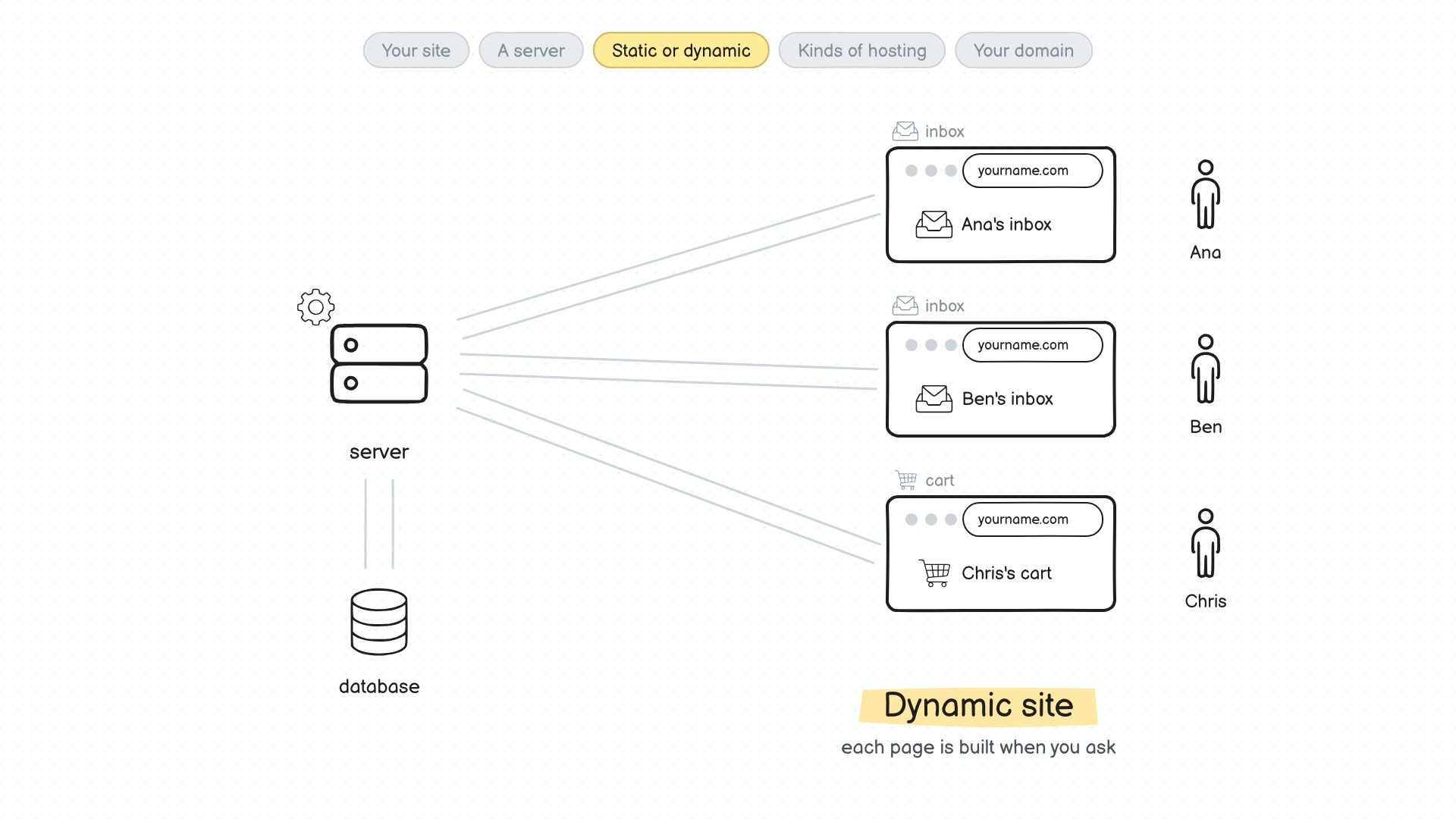
A static site is the same files for everyone, so the server only sends them. A dynamic site, like an inbox or a shopping cart, is built for each request: the server runs code and reads a database first, so it needs more from the server.
Shared hosting is the cheapest: your site shares one server's memory and processor with hundreds of other sites. A VPS splits a server into separate parts with their own resources, and a dedicated server gives you the whole machine. Cloud hosting, like AWS or Google Cloud, lets you add and remove servers as traffic changes and pay for what you use. Static hosts like GitHub Pages, Netlify and Cloudflare Pages copy your files to servers around the world, often for free. Last, you add your server's IP address to your domain's DNS records, so your domain leads visitors to your server.