What is the Internet
Follow one click from your browser to a server and back
What you'll learn
- How networks connect to form the internet
- What IP addresses, domain names and DNS do
- How HTTPS keeps your data private
- How a request travels as packets and comes back as a web page
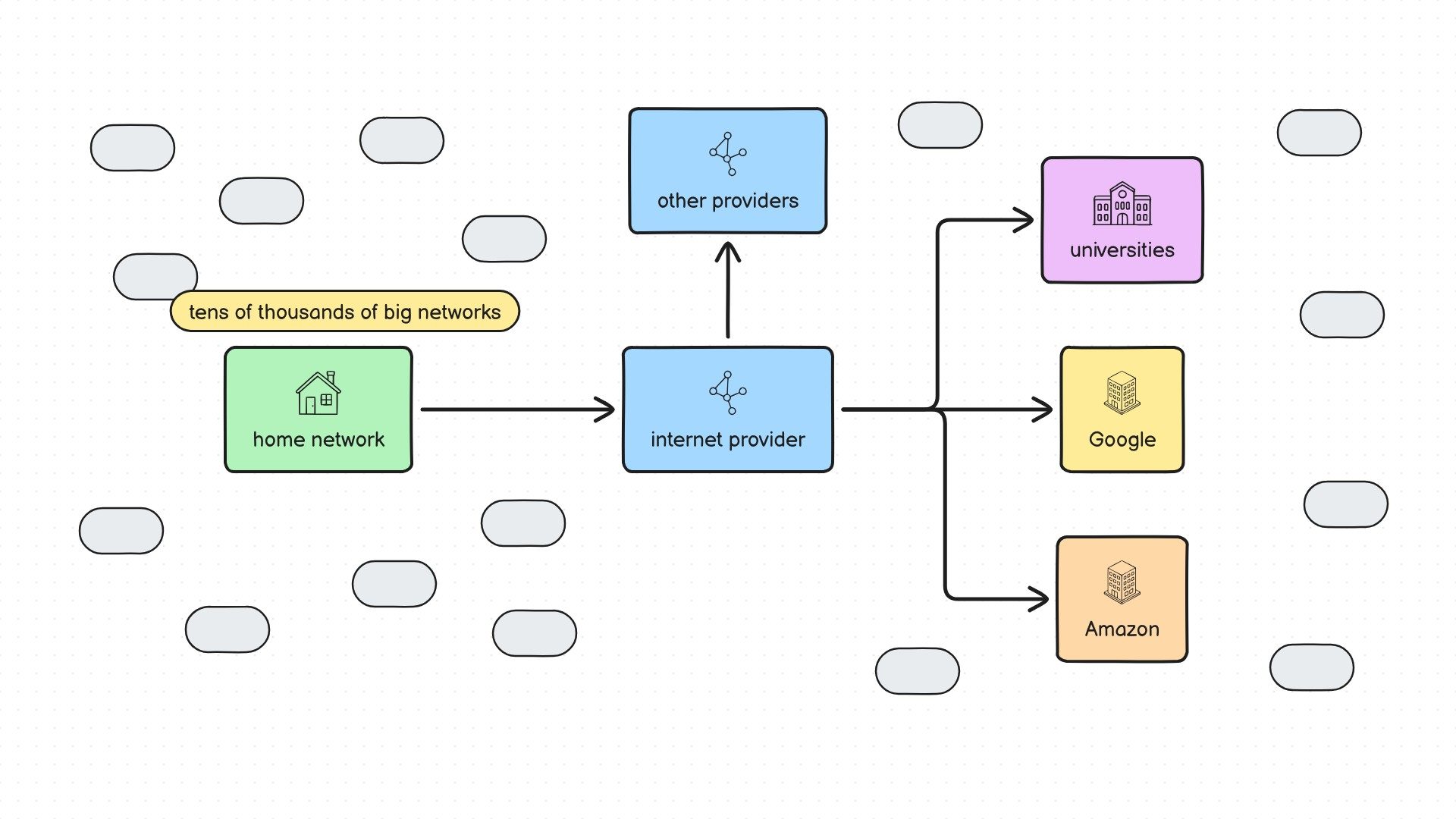
The internet is a network of networks. Your home network connects to your internet provider, which connects to other providers, universities and big companies. They are joined by real cables: fiber under streets, between cities and along the ocean floor. They all follow the same rules, called protocols, so machines built by different companies can understand each other.
When you open a website, DNS first turns the domain name into an IP address. TLS sets up a private connection (the S in HTTPS). Your browser then sends an HTTP request, cut into packets that TCP numbers so they can be put back in order. Routers pass each packet one step closer to its address until it reaches the server.
A server is a computer that is always on and holds the website's files; renting one is called hosting. It answers with the code 200 and sends back the HTML. The browser then asks for the CSS, JavaScript and images the page needs, builds the page and draws it on your screen.