What is a Domain Name
What a domain name is, who owns it, and how it leads to a website
What you'll learn
- What a domain name is and why we use names instead of IP addresses
- The parts of a domain name: top-level domain, name and subdomains
- How registrars and registries rent and track domain names
- How DNS records point a domain at a server and an email provider
Every computer on the internet has an IP address, but numbers are hard to remember and they change when a site moves to a new server. A domain name like roadmap.sh is an easy name for a website that stays the same. The last part, .sh, is the top-level domain, and the part before it is the name the owner picked. The owner can add subdomains like docs.roadmap.sh or www.roadmap.sh without buying a new name.
You don't buy a domain name forever. You rent it, usually a year at a time. Each top-level domain is run by a registry, which keeps the list of every name under it and who holds it. The .com registry alone holds about 160 million names. You rent a name through a registrar like Namecheap or GoDaddy, and a .com costs about $10 to $20 a year. If you stop paying, the name expires, and after a grace period anyone can register it.
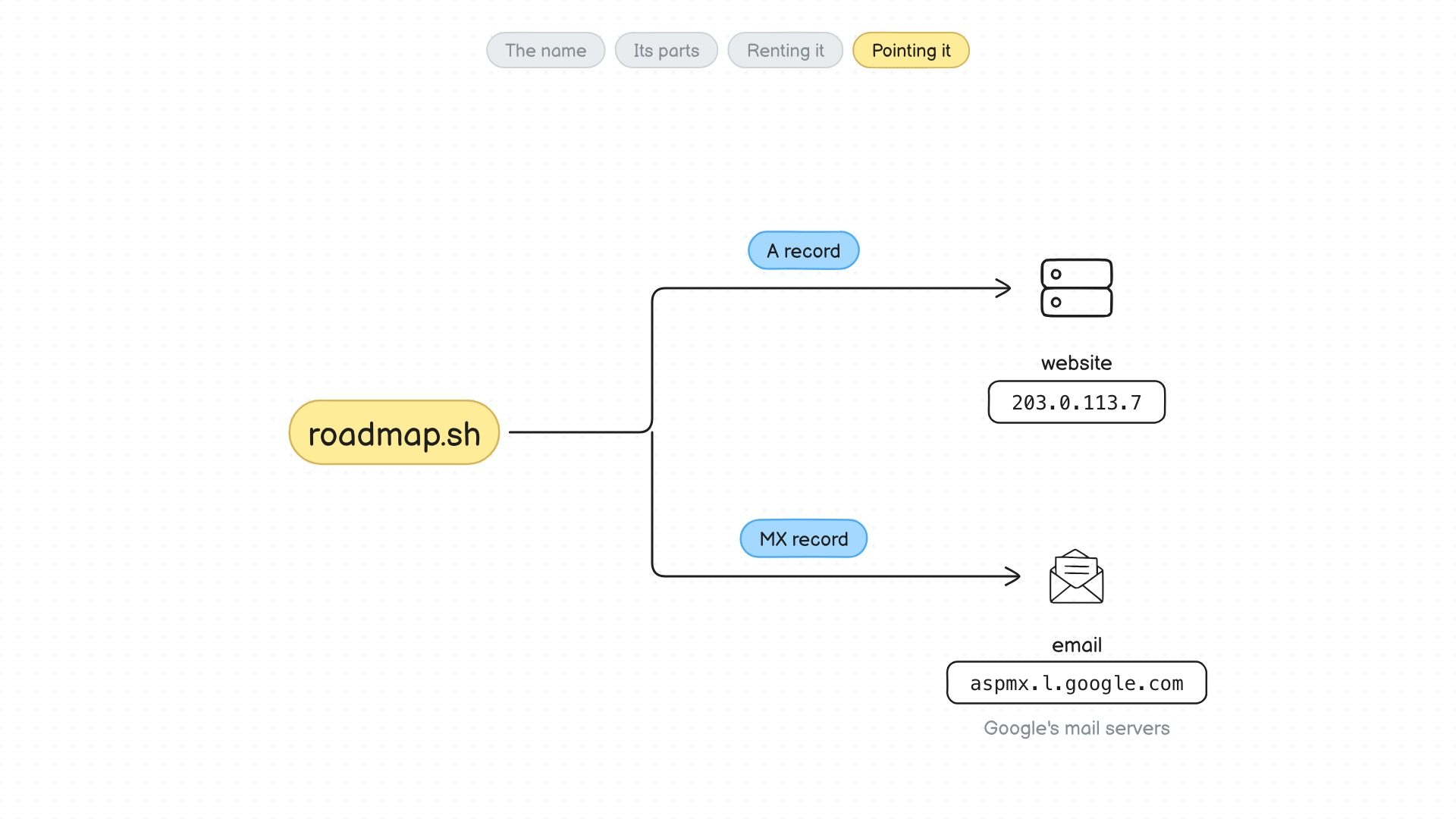
Owning the name is only half the job. DNS records point it at your website: an A record says which IP address the name is at, and an MX record says which server gets the domain's email. When the site moves to a new server, the owner only changes the record, so the name stays the same and visitors never notice.