CAP Theorem Explained
Why it's really consistency or availability, during a network split
What you'll learn
- What consistency, availability and partition tolerance mean
- Why 'pick two of three' is misleading
- How CP and AP systems behave during a partition
- PACELC: latency vs consistency the rest of the time
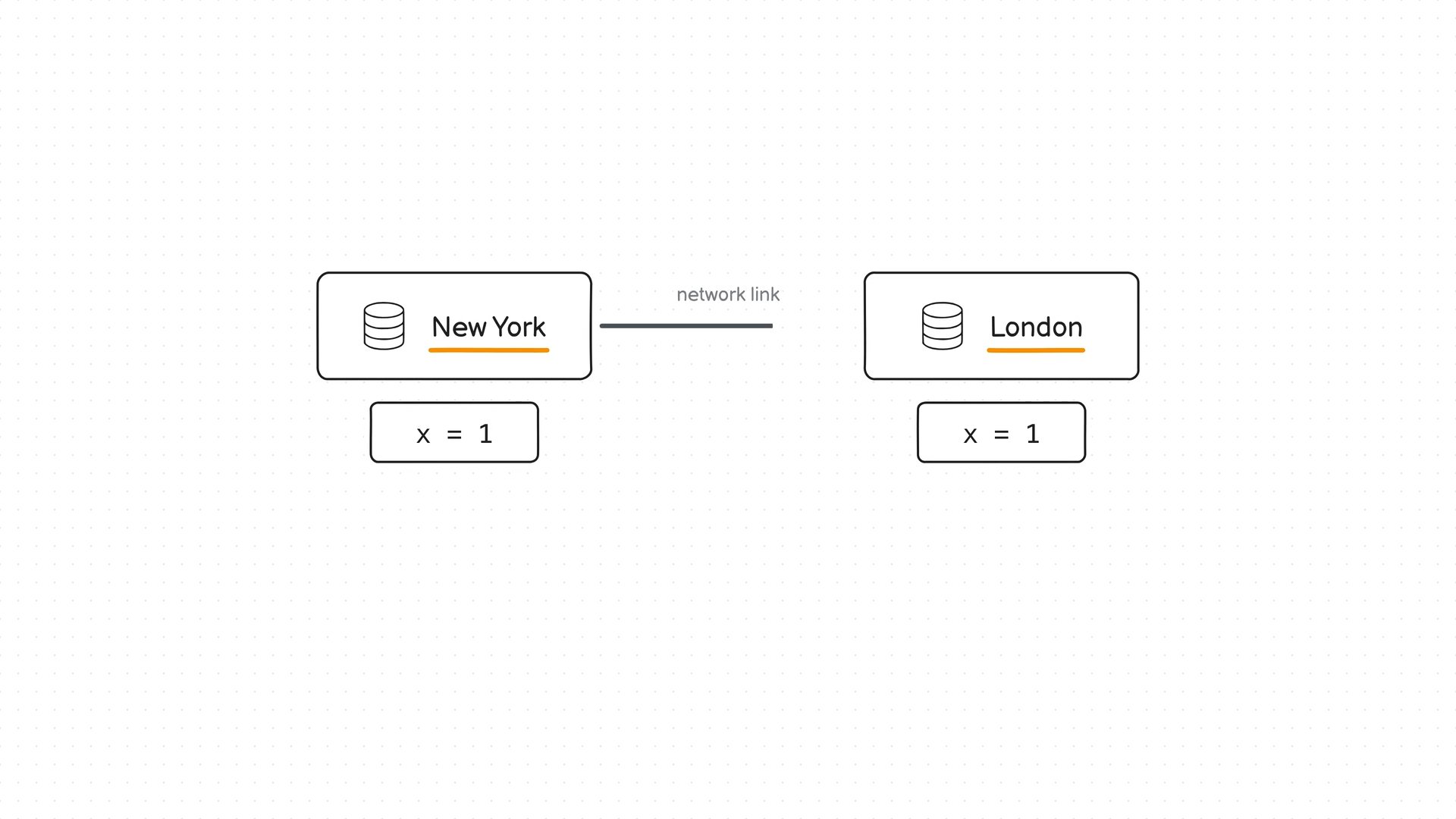
In this video, we'll look at what happens when two database servers, one in New York and one in London, lose the connection between them while users keep reading and writing. We'll use that example to explain what the CAP theorem really says, and why a distributed system has to choose between consistency and availability during a network partition.
We'll also cover CP and AP systems, how each kind behaves during a partition, and why the popular "pick two of three" explanation is misleading.
Finally, we'll look at PACELC and the trade-off between latency and consistency when the network is working normally.