Claude Code vs OpenCode: Which Coding Agent Fits You?
 William Imoh
Choosing between Claude Code and OpenCode isn't just about picking the better coding agent. Both tools give you different levels of control over the models and infrastructure behind your coding workflow. The wrong decision could mean paying more than you need to, losing the flexibility you expected, or spending time managing a setup you don't want to maintain.
Claude Code and OpenCode are both terminal-based, agentic coding agents. They read your codebase, edit files, and run commands autonomously from the command line (CLI) rather than a chat window. Where they differ is in how much of the stack you control, which matters if cost, privacy, or vendor lock-in are concerns. If you need to switch between Claude and other model providers as your needs change, that distinction is especially important. Claude Code gives you a more managed experience, but limits you to Anthropic's models. OpenCode gives you more control over your models and providers, but requires more setup.
This guide compares the two agents across the tradeoffs that matter in practice, helping you understand what you’ll gain and give up with each.
TL;DR: Claude Code vs. OpenCode
Go for Claude Code if…
You want a polished, managed experience with no setup overhead.
You're happy running on the Anthropic ecosystem and want them tightly optimized.
You want your existing Claude Pro or Max subscription to cover your development work.
You care about latency and want the faster default experience.
Go for OpenCode if…
You want flexibility across many providers, or you want to run local models via
Ollama.Your code needs to stay on your machine for privacy or regulated work.
You want OpenCode open-source codebase, which you can inspect, modify and self-host.
You want to avoid locking into a single vendor.
You're comfortable configuring your own setup.
Claude Code vs. OpenCode: Comparison table
Feature | Claude Code | OpenCode |
|---|---|---|
Developer | Anthropic | Anomaly (formerly SST) |
License | Proprietary, closed | Open source, MIT-licensed |
Model support | Anthropic models only | Model-agnostic, 75+ providers, including local models |
Cost model | Bundled into Claude Pro/Max subscription, or pay-as-you-go API | Agent is free. You pay only for the model you point it at, or $0 with a local model |
Claude subscription support | Yes, native | No. Blocked by Anthropic (Jan 2026); OpenCode dropped OAuth support (Feb 2026). Claude models can be used with an API key only. |
Architecture | Integrated | Client-server, headless server for async/remote |
Local / offline execution | No | Yes, via Ollama and other local-model backends |
Interfaces | Terminal, IDE extensions, desktop app | Terminal User Interface, IDE extensions, desktop app |
Extensibility | MCP, skills, subagents | Agents, plugins, MCP, LSP, Client/Server API |
Maturity / support | Managed and supported by Anthropic | Community-driven, fast release cadence, large contributor base |
Why choose Claude Code?
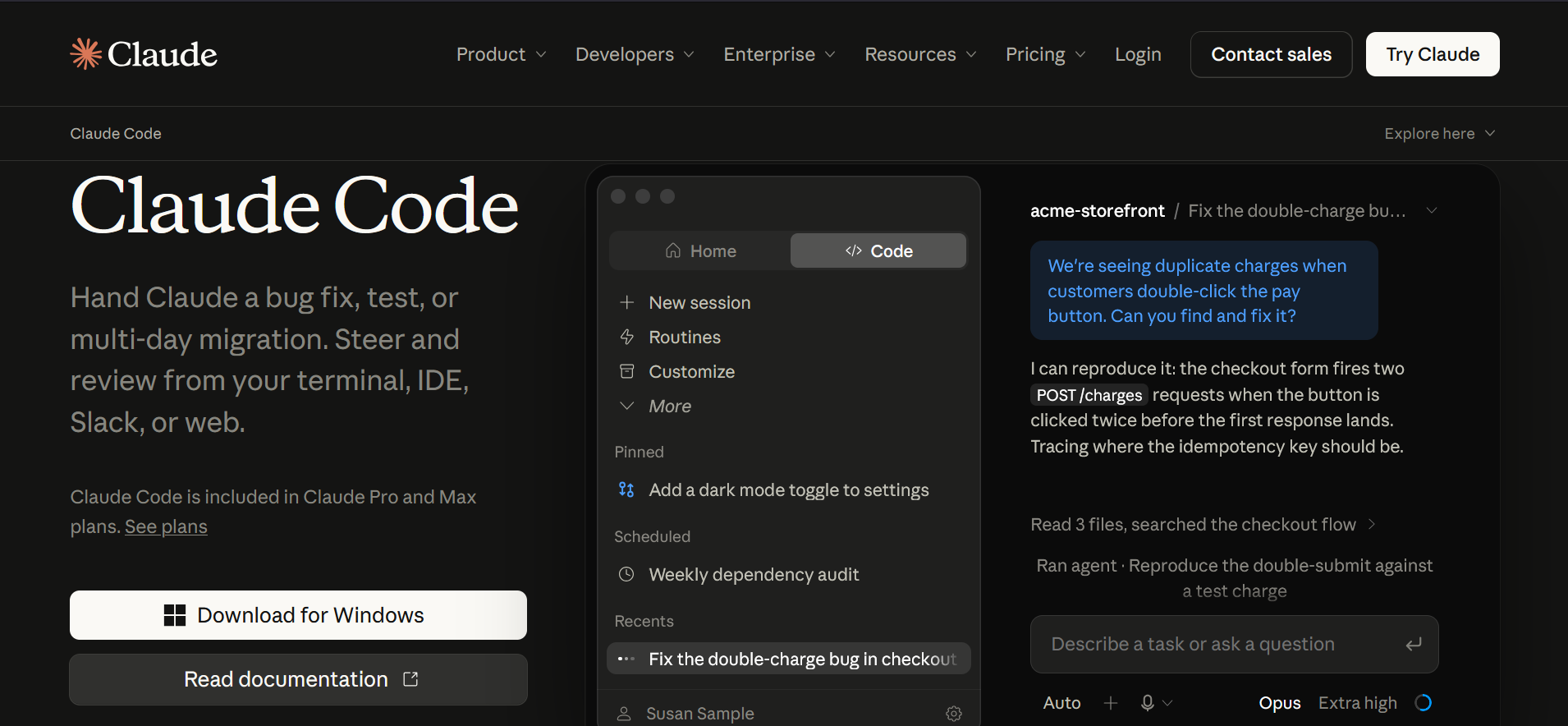
Claude Code, Anthropic’s terminal-based agent, is designed for developers who want to work with Claude directly from their terminal or supported IDEs. It can inspect a codebase, edit files, run commands, and work through tasks while Anthropic manages the underlying infrastructure. It keeps the context of your project as you go and can plug into MCP servers and GitHub workflows.
Managed, polished, low setup
Claude Code connects to Anthropic's hosted service by default, so you have no separate provider to configure. As a CLI tool, Claude Code is installed from the terminal, after which you authenticate with your Claude account or Anthropic Console and start working on your project. Claude Code Pro and Max subscribers can use it through the same subscription they use for Claude, while API users pay based on their model usage.
This makes Claude Code a natural fit if you want an integrated experience and don't need to change model providers.
Speed and latency
Claude Code is built for fast, iterative coding sessions where you can give an instruction, review the changes, and continue without long pauses between steps. This is made possible by its tight integration with Anthropic's platform, which keeps interactions responsive. That responsiveness is particularly useful when working through a codebase interactively, where latency can quickly add friction to repeated edits, commands, and follow-up instructions.
Subscription-bundled access
A Claude Code subscription is included with Claude Pro and Max subscriptions for individual users. In the version of Claude's subscription lineup as of September 2026, the Pro plan costs $20/month, while the Max plan has two tiers at $100/month and $200/month. The plans share usage between Claude and Claude Code, so your subscription doesn't provide separate, unlimited usage for each.
You can also use Claude Code through Anthropic's API with pay-as-you-go billing. The key distinction is that a Claude subscription covers Claude's native applications, including Claude Code.
Why choose OpenCode?
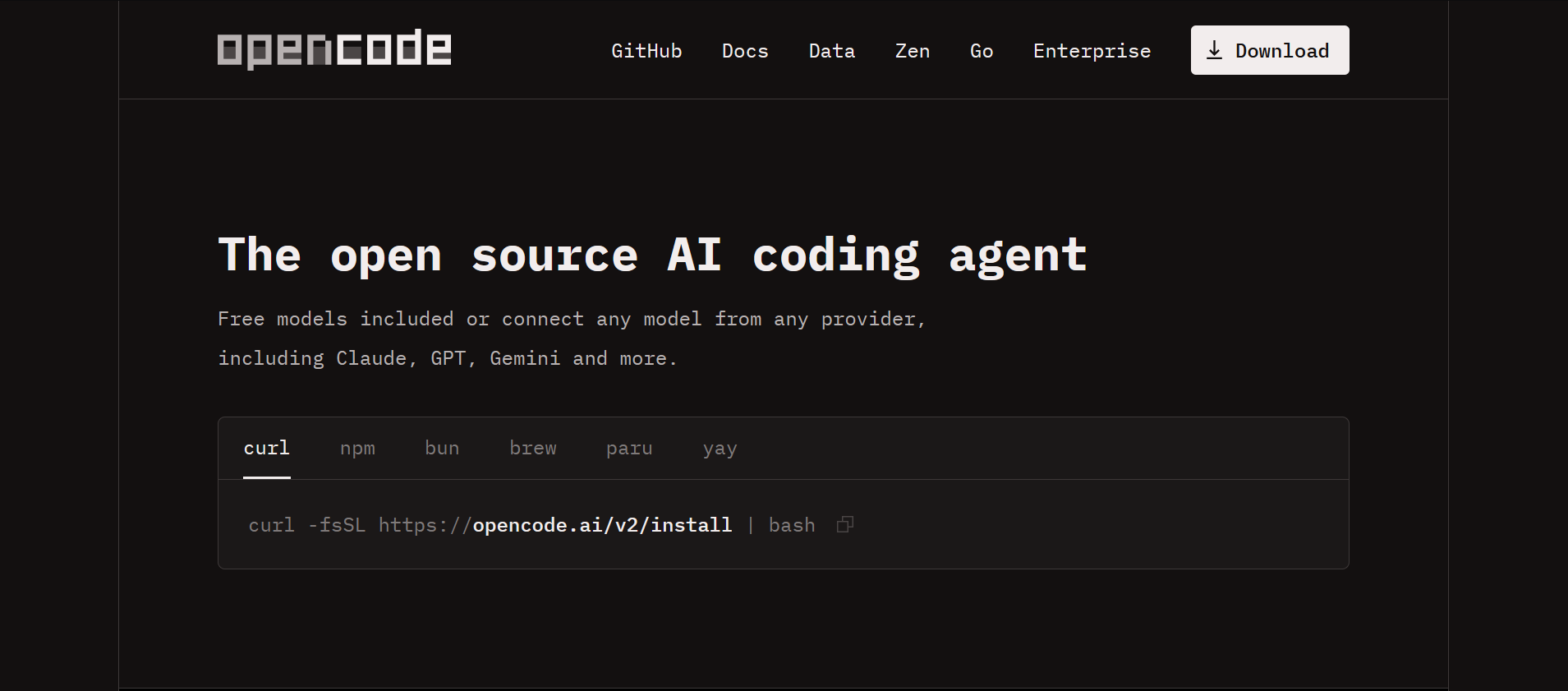
OpenCode is an open-source, MIT-licensed, model-agnostic terminal agent built by Anomaly, formerly known as SST. It has grown rapidly over the years, garnering hundreds of thousands of GitHub stars and contributions from hundreds of developers. OpenCode is built around giving you control over which models and providers you use, rather than tying your workflow to a single provider.
Here are the key reasons developers choose OpenCode:
Model agnosticism and no lock-in
OpenCode supports a wide range of model providers, including Anthropic, OpenAI, Google, DeepSeek, and local runtimes such as Ollama. Switching between them doesn't require changing your workflow, so you can choose based on cost, capability, or privacy. You can even pick a model with a larger context window for bigger tasks. Keep in mind that the quality of the code and responses you get can vary significantly with the model you choose, so model selection still plays an important role in the overall experience.
Open source, self-hosting, and privacy
Because OpenCode is open source, you can inspect and modify its code and run it on infrastructure you control. This can be useful when you need greater control over where your code and data are processed, especially for regulated work or NDA-bound client projects where code legally can't leave your infrastructure. If air-gapped execution is a hard requirement, make sure to verify your specific configuration rather than assuming "local" means fully offline.
Cost control
OpenCode itself is free to use, but you pay for the models and providers you connect to. You can use paid APIs or run local models at no cost, giving you more control over your spending. Your actual cost will depend on the models you choose and how heavily you use them.
Claude Code vs. OpenCode: Key differences
Both tools offer powerful agentic capabilities, but they take different approaches to model choice, privacy, cost, and setup. Below are some of the major differences between the two:
Proprietary versus open source
With Claude Code, you get Anthropic's supported implementation instead of maintaining the software yourself. With the open-source OpenCode, you can inspect its code, modify it, and run it on infrastructure you control. This difference hinges on how much of the stack you can control. One is managed for you; you manage the other, opening the gate for optimizations in areas like prompt and inference engineering.
Single vendor versus model choice
Claude Code is built around Anthropic's Claude, so you don't need to choose or configure a separate provider. OpenCode supports multiple model providers, allowing you to switch between them without changing your workflow.
That flexibility helps if you want to experiment with different models or switch providers as your needs change. It also means more decisions to make, since you're responsible for making those choices and configuring them.
Privacy and local execution
Claude Code runs on Anthropic's cloud-managed service, while OpenCode can be configured to use local models through runtimes such as Ollama. Local execution gives you more control over where your code and prompts are processed. If you take data privacy seriously, a locally managed setup where you are in control could be best.
Cost and access model
Claude Code is available through Claude Pro or Max subscriptions or through API usage. OpenCode itself is free, but you pay for the models and providers you connect to, unless you use a local model.
There isn't a simple cheaper option. Your actual cost depends on how much you use the agent, which models you choose, and whether you already pay for a Claude subscription.
Speed and setup effort
Claude Code requires less configuration because Anthropic manages the model and provider layer. OpenCode requires more setup because you choose the provider and model yourself. That doesn't make one universally faster. Claude Code gives you a more streamlined default path, while OpenCode gives you more control over the components behind the experience.
Which tool should you choose? Your decision framework
The question is not which tool is better, but which fits your situation best across the factors below:
Privacy-sensitive or regulated work: If you're in finance, healthcare, defense, or handling NDA-bound client code, OpenCode's local and self-hosted path is the better choice. Claude Code has no offline mode, so if this applies to you, the decision is straightforward.
Cost-constrained or high-volume use: High-volume users on an efficient local model can spend close to nothing. High-volume users on a premium hosted model through the API can end up paying more than a Claude Max plan. There's no universal winner here. Run a test project on each tool, then do the math on model-cost-only or local execution against a flat subscription for your real workload.
Model experimentation: This is what OpenCode's agnosticism is built for. If you want to test a new model the week it launches without touching your workflow, this is a meaningful, ongoing advantage.
Wanting a polished, managed experience: Claude Code is the answer. It is built for quick startup and use.
Already invested in a Claude Max subscription: Claude Code, since that subscription cannot power OpenCode after Anthropic's 2026 policy change. Using OpenCode with Claude models means paying for API access on top of a subscription you're already paying for.
Teams weighing control against support: This comes down to a broader organizational question of open-source ownership, inspectability, managed support and predictability. Teams with strong platform engineering capacity often lean toward OpenCode. Teams that want to minimize what they have to maintain themselves often lean toward Claude Code.
Wrapping up
Claude Code and OpenCode are both terminal-based, agentic agents that read your codebase, run commands, and edit files autonomously, but their underlying philosophies and ecosystems differ significantly. Claude Code gives you a managed, streamlined experience built around Anthropic's Claude, while OpenCode gives you more control over your models, providers, and deployment. The right choice depends on what matters most in your workflows, whether that's cost, simplicity, managed access, model flexibility, or greater control.
If you’re ready to get started with vibe coding, start by learning how to build your first app with Claude Code. If you want to build a broader foundation in AI development, you can also follow our AI Engineer roadmap to learn the skills and tools needed to build AI-powered applications.
Don’t forget to create a roadmap.sh account to track your progress, save learning paths, and access personalized roadmaps as you continue building your skills. The AI Tutor can also help you explore concepts or answer follow-up questions.
